

Writing SOAP Notes to Build a Clear Story Over Time
Maintaining clinical continuity from one visit to the next
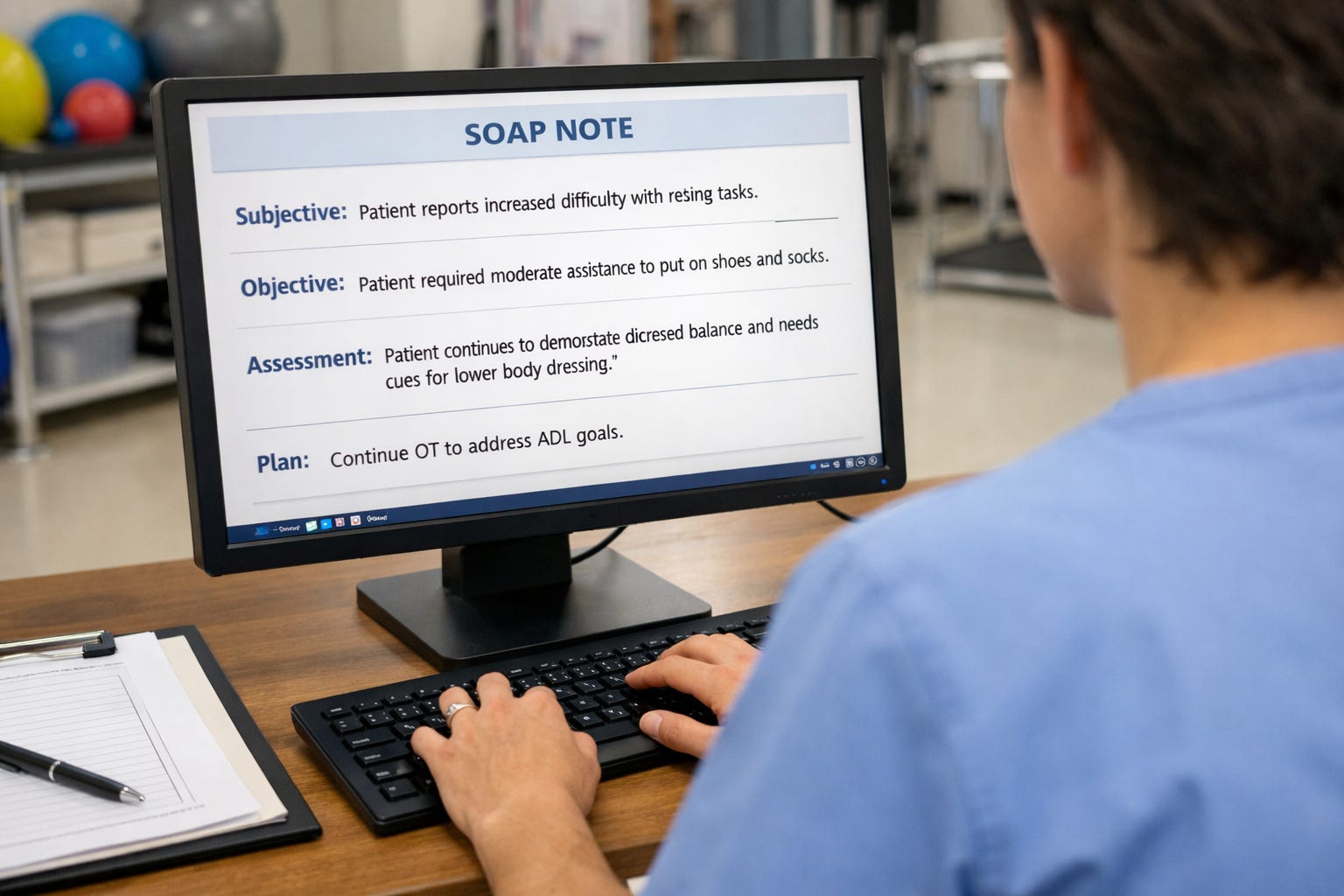
Occupational therapy does not move in a straight line. Some days performance looks stronger, other days it looks inconsistent. Context changes, routines shift, and progress often shows up in one area while another remains challenging. That variability is a normal part of skilled practice.
When SOAP notes are written one session at a time without looking forward or back, the bigger picture can get lost. Sessions may read like isolated snapshots instead of parts of the same plan of care. Even well-written notes can start to feel repetitive or slightly disconnected when there is no clear thread carrying across visits.
The focus here is on using SOAP notes to maintain that thread. When documentation is written with continuity in mind, each note builds on the last, reflects ongoing clinical reasoning, and tells a clearer story about performance, intervention, and progression over time.
What a Cohesive Clinical Story Actually Means
A cohesive clinical story answers one overarching question across the episode of care:
How is this patient functioning now, why does skilled OT remain indicated, and how is intervention evolving in response?
This story unfolds over time. No single SOAP note is meant to explain everything or prove progress on its own. Instead, each note adds one piece to a larger clinical picture.
Cohesion emerges when each note does a few key things well:
Acknowledges where the patient was, grounding today’s session in prior performance without restating the entire history.
Captures what happened today, focusing on observed performance and therapist-directed intervention rather than a list of activities.
Interprets what that change means, explaining whether performance reflects improvement, variability, compensation, or ongoing limitation.
Signals where care is going next, so the direction of intervention is clear even when progress is gradual or uneven.
When these elements are present, the notes begin to read as connected rather than repetitive. Small changes make sense. Variability feels expected. Progression or continued focus is easier to follow.
Cohesion is not about writing perfect notes. It is about maintaining a clear sense of direction across visits so the clinical story remains intact.
Example: How a Clinical Story Builds Across Visits
Visit 1
Subjective
Patient reports difficulty standing at the sink long enough to complete grooming tasks due to fatigue.
Objective
Patient completed grooming tasks in standing with contact guard assistance and required seated rest break after approximately 2 minutes due to decreased endurance.
Assessment
Decreased standing tolerance limits ability to complete grooming tasks safely and efficiently. Fatigue continues to impact participation in basic self-care routines.
Plan
Continue OT to address standing tolerance during grooming tasks with focus on gradual increase in task duration.
Visit 2
Subjective
Patient reports grooming feels slightly easier but continues to feel tired after standing tasks.
Objective
Patient completed grooming tasks in standing for approximately 4 minutes with supervision before requiring rest break.
Assessment
Improved standing tolerance noted compared to prior session; however, endurance remains a limiting factor for sustained task completion. Continued skilled intervention indicated to build consistency and safety.
Plan
Continue OT with progression of standing duration during grooming tasks and incorporation of pacing strategies.
Visit 3
Subjective
Patient reports increased confidence completing grooming tasks and reports using pacing strategies at home.
Objective
Patient completed full grooming routine in standing with supervision and no rest breaks.
Assessment
Improved standing tolerance and carryover of pacing strategies support increased independence with grooming tasks. Performance indicates readiness for further progression of standing ADLs.
Plan
Progress standing ADL demands and integrate increased task complexity while reinforcing pacing strategies to support carryover.
Why this works
Across these notes:
Each visit acknowledges where the patient was without repeating prior documentation
Today’s performance is clearly captured
The Assessment explains what the change means, not just that change occurred
The Plan consistently signals direction, even as progress unfolds gradually
No single note tells the full story. Together, they create a clear, logical clinical narrative.
