

Improving ADL Performance Through Postural Control and Trunk Stability
Building the Stability That Makes ADLs Feel Easier
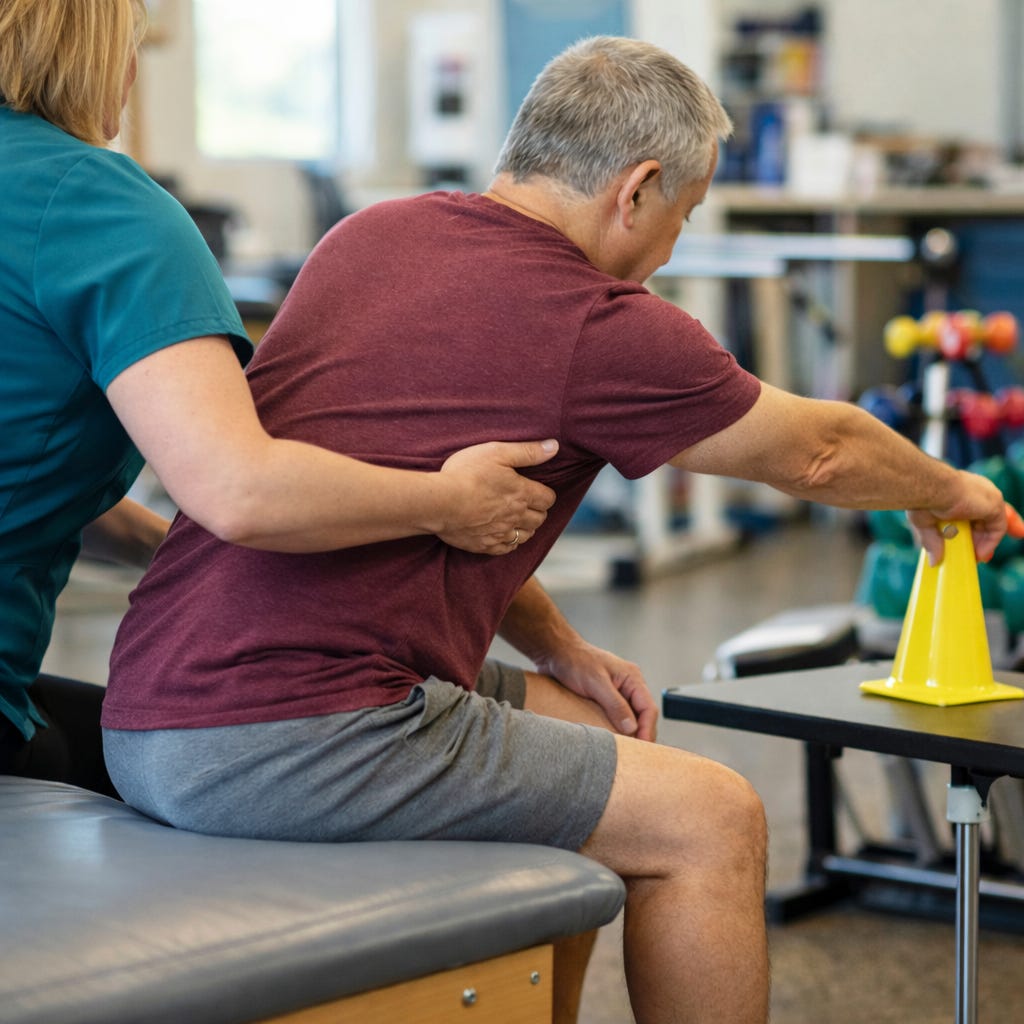
Occupational therapists spend a lot of time addressing bathing, dressing, toileting, grooming, and feeding. We break down tasks, grade them thoughtfully, introduce adaptive equipment, and modify the environment to support success.
When a self-care task continues to feel effortful or inefficient despite those adjustments, it usually points to something more foundational that deserves our attention.
When an ADL isn’t progressing the way you expect, the issue usually isn’t just the task. It might be cognition, pain, endurance, or environmental demands. And often, especially in adult rehabilitation, there is a foundational postural component influencing how the task unfolds.
When the trunk isn’t providing a steady base, the body finds another way to get the job done. Weight shifts become guarded. Reaching looks hesitant. Sitting balance requires more visible effort. The compensation may not be dramatic, but it shows up in small pauses, extra bracing through the arms, or subtle adjustments that slow the task down.
When performance continues to look slow, unsteady, or fatiguing despite thoughtful grading of the task, it’s worth pausing and asking whether proximal stability is playing a bigger role than it initially seemed.
Postural control and trunk stability are common, and sometimes overlooked, contributors to ADL inefficiency, particularly in diagnoses that affect neuromuscular control, endurance, or coordinated movement. Looking at posture does not mean shifting away from occupation. It simply means asking whether the body can provide the stability and control the occupation requires.
This post walks through how postural control and trunk stability directly influence ADL efficiency, safety, and endurance in adult rehabilitation settings. We will look at how trunk impairments show up functionally, how to analyze the postural demands of common ADLs, and how to design interventions that address those demands without requiring full ADL repetition every session.
Why Trunk Stability Matters in ADL Performance
The trunk plays a bigger role in occupational performance than we sometimes give it credit for. It’s the anchor for nearly every self-care task we work on in adult rehab.
When you start looking closely, trunk control shows up at multiple layers of performance all at once.
At the most basic level, it reflects what’s happening underneath the movement. Neuromuscular activation, alignment, endurance, coordination, and the ability to generate and control force through the core all influence how the body organizes itself. Those systems shape whether someone can sit upright without drifting, shift weight smoothly, or move their center of mass with control during transitions.
What we actually see in session isn’t neuromuscular activation or force production. We see how the person moves. Trunk stability shows up in how they sit without drifting, how they line up at the sink, how they position themselves for dressing, how confidently they reach outside their base of support, or how long they can stay upright during grooming. When those movements start to look choppy, hesitant, or more effortful than they should, it’s often a sign that proximal control is shaping what’s happening. The task might be simple on paper, but the way it unfolds tells you a lot about what the trunk is contributing underneath the surface.
And then there’s the task itself, where everything comes together. Self-care doesn’t just require knowing the steps. It places very specific postural demands on the trunk. Bathing calls for repeated reaching and the ability to come back to midline each time. Lower body dressing asks for controlled trunk flexion and steady lateral weight shifts. Toileting depends on coordinated forward translation and controlled descent. Even something as routine as feeding in sitting requires enough upright stability to avoid constant repositioning. When you start viewing these tasks through a postural lens, it becomes easier to see how much the trunk is contributing to how smooth, safe, and efficient they look.
Looking at trunk control across these layers makes it clear that it isn’t separate from function. It’s woven into how daily tasks actually get done. The trunk is more than a muscle group to strengthen. It’s the proximal foundation that allows distal movement to be efficient, safe, and sustainable in real-life activities. If that foundation isn’t steady enough for the demands of the task, self-care tends to look slower, less coordinated, and more fatiguing. As trunk control improves, ADL performance often becomes smoother and more efficient, even without changing the task itself.
That’s why trunk stability deserves real attention in adult practice. It connects what’s happening at the body level with what we actually see in performance and how the person functions in daily life.
When trunk stability is impaired, it usually shows up in small but meaningful ways during self-care. You might notice difficulty with:
Maintaining midline in sitting, with subtle drifting, slumping, or the need to constantly reposition.
Controlling weight shifts during reaching, especially when the person moves outside their base of support to grab clothing or hygiene items.
Generating force for upper or lower body movement, because the trunk is not providing a steady base for the arms or legs to work from.
Sustaining upright posture for the length of the task, with gradual leaning, collapsing into flexion, or increasing reliance on the arms for support.
Managing dual demands, like reaching and rotating while also trying to stay balanced.
And these postural challenges do not stay contained at the movement level. They tend to spill directly into function:
ADLs take longer, because the person pauses, resets, or moves more cautiously.
Assistance levels increase for better stabilization.
Compensatory patterns become more obvious, including heavy arm support, widened stance, or stiff, guarded movements that increase fall risk.
Fatigue shows up quickly, particularly in seated bathing or standing grooming tasks.
When you start looking at it this way, trunk stability becomes less about posture in isolation and more about how efficiently and safely someone can move through the task in front of them.
You can adjust the setup, simplify the environment, or add adaptive equipment. Those changes absolutely matter. At the same time, if the trunk cannot provide stability during movement, the ADL is likely to stay inefficient and less safe than it could be.
How Postural Control Shows Up During ADLs
When trunk stability is part of the picture, the breakdown doesn’t stay neatly contained to one task. It tends to show up across multiple ADLs in similar ways.
You might notice:
Loss of midline or gradual postural drift, especially during sustained sitting or standing.
Forward collapse without controlled return to upright, particularly during bending or transitional movements.
Hesitation or instability when reaching outside the base of support, whether toward the feet, across midline, or behind the body.
Overreliance on upper extremities for stabilization, including heavy leaning on surfaces, gripping grab bars, or pushing excessively through the arms during transfers.
Widened stance or guarded movement patterns in standing, with minimal dynamic weight shifting.
Increased sway or segmented movement during bilateral tasks, when both arms are active and the trunk has to stabilize without support.
Fatigue-related collapse, where posture deteriorates as the task continues.
These patterns can appear during dressing, bathing, grooming, feeding, or toileting. The specific task may change, but the underlying movement issue often looks similar.
What makes this clinically meaningful is that these patterns often get attributed to limb weakness or isolated joint limitations. In reality, the trunk is being asked to maintain control across multiple planes while the extremities move through space. That demand exists in nearly every self-care task.
When proximal stability is inconsistent, ADLs tend to become slower, more segmented, and more effortful. The patient pauses more often. They brace more. They rely more heavily on external support. The task itself may be familiar and well understood, but the movement underneath it is doing more work than it should.
Looking at ADLs through this lens shifts the focus from repeating the task to strengthening the foundation that supports it.
Proximal Stability and Functional Performance
Efficiency in ADLs is not just about getting the task done. It’s about how smoothly, safely, and sustainably the task is performed. For that to happen, proximal stability and distal mobility have to work together. When the trunk is steady, the arms and legs can move with more precision and less effort.
The trunk plays several key roles in making that possible. It:
Provides a stable base for upper extremity reach, allowing the arms to move freely without constant correction for balance.
Allows controlled weight shift, so movement outside the base of support feels intentional rather than risky.
Supports midline orientation, which reduces the need for repeated repositioning during tasks.
Facilitates force generation, especially during transitional movements like sit-to-stand or bending toward the feet.
Reduces unnecessary energy expenditure, because the body is not working overtime just to stay upright.
When trunk control is reduced, you can often see the difference in how the task unfolds. Instead of smooth, coordinated movement:
The patient overuses distal musculature, with the arms or legs stepping in to compensate for an unstable base.
Movements become segmented instead of fluid, with pauses and resets between each step of the task.
Extra time is required for repositioning, especially during dynamic activities like dressing or bathing.
Fatigue increases, sometimes well before the task is complete.
Fall risk increases, particularly during weight shifting or transitional movements.
This is where clinical reasoning needs to show up clearly in your documentation. It becomes meaningful when you connect the dots in a straightforward way:
Impaired trunk stability → Inefficient or unsafe ADL performance
When that relationship is explicit in your note, it reflects the thinking behind your intervention and makes it clear why addressing trunk control is directly tied to improving everyday function.
Activity Analysis: Postural Demands of Common ADLs
Before we jump into interventions, we need to analyze the postural requirements of specific tasks.
Upper Body Dressing
Maintaining upright midline alignment in sitting or standing.
Stabilizing the trunk during bilateral upper extremity movement, such as threading arms into sleeves.
Managing trunk rotation, especially when adjusting clothing across the back or pulling garments down evenly.
Controlling subtle weight shifts, particularly when reaching across midline.
Sustaining posture for the duration of the task, without collapsing into flexion or relying heavily on external support.
Lower Body Dressing
Controlled trunk flexion, especially when reaching toward the feet to don socks or thread pants.
Returning to upright from flexion, without pushing heavily through the arms or losing balance.
Lateral weight shifting in sitting, when adjusting clothing or positioning one leg at a time.
Single-limb stability in standing when stepping into pants.
Trunk rotation during clothing adjustment, particularly when managing garments posteriorly.
Maintaining midline alignment throughout the task, even as the base of support changes.
Grooming
Maintaining upright midline alignment, without drifting into flexion or leaning heavily onto surfaces.
Stabilizing the trunk during repetitive upper extremity movement, such as brushing hair or washing the face.
Managing small weight shifts, particularly when reaching for items placed slightly to the side.
Coordinating trunk control during bilateral upper extremity tasks, when both hands are active at once.
Sustaining posture for the duration of the task, especially during longer grooming routines.
Bathing
Sustained upright alignment, either in sitting or standing, without progressive collapse into flexion.
Controlled anterior trunk flexion, particularly when reaching toward the lower extremities.
Lateral weight shifting, especially when washing one side of the body or reaching across midline.
Trunk rotation, required for perineal hygiene and washing the back or opposite side.
Dynamic balance during reach outside the base of support, often in a slippery or unstable environment.
Midline recovery after movement, returning to neutral alignment after flexion or rotation.
Postural endurance, maintaining alignment throughout the duration of the task.
Coordination of trunk control while the extremities move through space, as both upper and lower extremities are active during washing.
Feeding
Maintaining upright midline alignment in sitting.
Subtle weight shifts and trunk adjustments, as the person reaches for utensils, cups, or items across the tray.
Trunk stabilization during upper extremity movement, particularly when bringing food to the mouth.
Control across midline during bilateral coordination tasks, such as cutting food or stabilizing a utensil.
Postural endurance for the duration of the meal, preventing gradual flexion or lateral collapse.
Dynamic trunk stability during reach beyond the immediate base of support, such as reaching for items placed slightly off-center.
Toileting
Controlled anterior weight shift during sit-to-stand, bringing the center of mass forward before lift-off.
Maintaining trunk alignment during standing.
Eccentric trunk control during stand-to-sit, allowing a gradual, safe descent onto the toilet.
Trunk rotation and lateral stability during hygiene and clothing management, especially when reaching posteriorly or to one side.
Midline recovery after movement, without excessive sway or need for external support.
Coordinating trunk stability while the extremities move through space, particularly when both hands are engaged in adjusting garments.
When you identify these postural components, you can target them directly without requiring full task repetition every session.
That is where skilled intervention becomes both efficient and occupation-linked.
Seated Postural Control Interventions
Edge-of-Bed Dynamic Weight Shifts
Working at the edge of the bed is a simple way to challenge seated trunk control. There’s no backrest to lean into, so the trunk has to stay active, but the environment is still controlled enough that you can grade it carefully.
Focus:
Controlled lateral weight shifting, moving side to side without collapsing or grabbing quickly for support.
Anterior weight shifting, bringing the trunk forward over the feet without losing balance or getting stuck in flexion.
Return to midline, emphasizing smooth recovery rather than a quick corrective movement.
Controlled lateral trunk movement, shifting weight to one side without collapsing or losing alignment.
You can make this easier or harder by adjusting how far they reach, how quickly they move, whether their hands are supported, or whether you add a light functional object to the task. The goal isn’t big movement. It’s steady, controlled movement with consistent return to center.
Clinical reasoning:
If a patient loses balance when donning pants in sitting, it’s often the lateral shift and recovery that break down, not the clothing itself. Before jumping back into full dressing practice, it can help to strengthen that specific movement pattern in isolation. Once the patient can shift and return to midline with better control, clothing management usually becomes smoother and safer.
The same applies to forward bending during sock donning. Practicing controlled anterior shift and return gives the trunk a chance to build the stability the task actually requires. Instead of repeating the ADL with compensation, you’re strengthening the movement underneath it.
Daily Note Example
S: Patient reports feeling unsteady when attempting to don pants in sitting.
O: Patient performed seated lateral weight shifts at edge of bed ×12 repetitions with contact guard assist to prevent loss of balance. Demonstrated decreased trunk elongation on right during left weight shift and required verbal cueing for controlled return to midline. Completed anterior weight shift drills toward floor-level target ×10 repetitions with improved trunk translation compared to prior session. No upper extremity bracing observed during final 4 repetitions.
A: Impaired lateral trunk stability and inconsistent midline recovery continue to limit safe lower body dressing in sitting. Patient demonstrates improved anterior trunk control and reduced reliance on upper extremity stabilization during dynamic seated tasks.
P: Continue skilled OT to progress seated dynamic trunk control with reduced external support and integration into simulated clothing management tasks to improve safety and independence with lower body dressing.
Seated Reach Outside Base of Support
Seated reaching outside the base of support is a practical way to challenge dynamic trunk control in a way that closely mirrors real self-care tasks. Many ADLs require reaching slightly farther than feels comfortable, especially when retrieving clothing, hygiene items, or objects placed to the side. When that reach exceeds the immediate base of support, the trunk has to manage rotation, weight shift, and controlled recovery.
Focus:
Trunk rotation, allowing the torso to turn smoothly without collapsing or overcorrecting.
Active weight shift to one side, with the trunk staying tall and supported instead of folding or sinking.
Controlled return to midline, avoiding abrupt or momentum-driven correction after the reach.
The goal is not simply to “touch an object.” It’s to move outside the base of support in a way that looks intentional and stable, then return to center with control.
Grade by:
Distance of reach, gradually increasing how far the patient moves outside their base of support.
Speed of movement, progressing from slow, deliberate reach to more functional pacing.
Object weight, starting with lightweight items and advancing to slightly heavier objects to increase trunk demand.
Surface stability, beginning on a firm, stable surface and progressing to less stable seating as appropriate.
This intervention directly supports tasks like dressing, grooming, and bathing, where items are rarely positioned directly in front of the patient. Practicing controlled reach and recovery helps reduce hesitation, excessive bracing, and loss of balance during real ADL performance.
Daily Note Example
S: Patient reports difficulty maintaining balance when reaching for clothing items during dressing.
O: Patient performed seated reach tasks outside base of support at edge of bed ×15 repetitions, alternating left and right directions. Required contact guard assist during initial 6 repetitions due to trunk sway and delayed return to midline. Demonstrated improved trunk rotation and elongation on weight-bearing side during final 9 repetitions with standby assist only. Progressed reach distance by 4 inches and incorporated light object retrieval without upper extremity bracing.
A: Impaired dynamic trunk stability and delayed midline recovery limit safety during lower body dressing and grooming tasks. Patient demonstrates measurable improvement in rotational control and reduced reliance on external stabilization compared to prior session.
P: Continue skilled OT to progress dynamic seated trunk control with increased reach distance and reduced assist level. Integrate simulated clothing retrieval tasks to improve safety and efficiency with ADL performance.
Unsupported Sitting Endurance
Unsupported sitting endurance targets the ability to maintain upright alignment over time without relying on a backrest, arm support, or frequent repositioning. Many ADLs completed in sitting are not limited by initial balance, but by how long the person can sustain postural control before fatigue alters alignment.
Focus:
Sustained upright posture, maintaining midline alignment without progressive trunk flexion or lateral drift.
Postural correction in response to fatigue, recognizing subtle collapse and actively reestablishing alignment rather than bracing or stopping the task.
This intervention is not just about “sitting longer.” It’s about maintaining quality of alignment as time increases. You might observe how posture changes at one minute versus three minutes, or how upper extremity use shifts as endurance decreases. Cueing can gradually fade as the patient demonstrates more independent postural correction.
You can grade this by adjusting duration, adding light upper extremity activity, narrowing base of support, or introducing small reach demands while maintaining upright control.
Functional carryover:
Improved unsupported sitting endurance directly supports grooming and upper body dressing performed in sitting. When the trunk can remain upright without collapse, the arms can move more freely and efficiently. The patient is less likely to lean heavily onto surfaces, pause repeatedly to reset posture, or fatigue before the task is complete. Over time, improved sitting endurance translates into smoother, more sustainable ADL performance.
Daily Note Example
S: Patient reports increased fatigue during seated grooming tasks.
O: Patient completed unsupported sitting at edge of bed for 4 minutes without back support. Demonstrated gradual trunk flexion beginning at 2-minute mark, requiring verbal cueing for postural correction ×3 instances. Completed bilateral upper extremity grooming simulation during final 2 minutes with standby assist and no upper extremity bracing. Compared to prior session, increased unsupported sitting tolerance from 2 minutes to 4 minutes with reduced need for tactile cueing.
A: Decreased trunk endurance contributes to fatigue and postural collapse during seated grooming and upper body dressing tasks. Patient demonstrates measurable improvement in sustained upright alignment and independent postural correction.
P: Continue skilled OT to progress unsupported sitting endurance with increased duration and integration of dynamic upper extremity tasks to improve tolerance and efficiency with seated ADLs.
Standing Trunk Stability Interventions
Controlled Anterior Weight Shift Practice
Controlled anterior weight shift work is one of those simple but powerful standing interventions. It directly supports safer, more efficient transfers. Lower extremity strength is often part of the picture, but many patients struggle with sit-to-stand because their trunk isn’t moving forward enough, or it moves without good timing and coordination. If the center of mass doesn’t translate far enough over the feet before lift-off, the body ends up trying to stand from a slightly posterior position. That’s when you see heavy arm push, multiple attempts, or increased instability during the transition.
Focus:
Hip and trunk flexion synergy, coordinating forward trunk movement with appropriate hip flexion rather than bending at one segment in isolation.
Preparation for sit-to-stand, bringing the center of mass forward over the base of support before lift-off.
Controlled center of mass translation, emphasizing smooth, deliberate forward movement rather than abrupt momentum-driven attempts.
This intervention allows the patient to practice the movement pattern underneath sit-to-stand without immediately demanding full lift-off. You might begin with partial weight shift drills from a seated position, cueing forward translation over the feet, then progress to pre-lift holds where the trunk remains forward without standing. From there, you can integrate full sit-to-stand with improved mechanics.
Grading options include adjusting seat height, narrowing or widening base of support, fading upper extremity assistance, slowing movement speed, or adding brief holds at the point of maximal anterior shift.
Improving anterior weight shift often reduces the number of attempts needed to stand, decreases excessive upper extremity push, and improves overall transfer efficiency and safety.
Daily Note Example
S: Patient reports difficulty standing from toilet without pushing heavily through grab bars.
O: Patient engaged in seated anterior weight shift drills from standard chair height ×12 repetitions. Required minimal verbal and tactile cueing to coordinate trunk flexion with hip flexion and achieve forward center of mass translation over feet. Demonstrated improved forward translation during final 6 repetitions with decreased reliance on bilateral upper extremity push. Progressed to partial sit-to-stand holds at maximal anterior shift ×5 repetitions with contact guard assist for safety.
A: Insufficient anterior trunk translation contributes to inefficient sit-to-stand and reliance on upper extremity support during toilet transfers. Patient demonstrates improved coordination of hip and trunk flexion synergy compared to prior session, with reduced momentum-driven attempts.
P: Continue skilled OT to progress anterior weight shift control with decreased upper extremity assistance and integration into functional toilet transfer to improve safety and independence.
Functional Reach with Trunk Rotation
Functional reach with trunk rotation is a highly transferable intervention because so many ADLs require controlled turning and reaching rather than straight forward movement. Rotation introduces additional postural demands. The trunk must stabilize in one plane while moving in another, and it must return to midline without overcorrection or loss of balance.
Focus:
Rotational control, allowing the trunk to turn smoothly without collapsing, twisting excessively, or relying on momentum.
Multi-planar stability, maintaining alignment as the body moves across sagittal, frontal, and transverse planes at the same time.
Dynamic balance, especially when reaching behind, across midline, or outside the immediate base of support.
This can be practiced in sitting or standing, depending on the patient’s level. You might incorporate reaching for objects placed diagonally, retrieving items from varying heights, or performing simulated task components that require turning and returning to center with control. The emphasis is not on how far the person can reach, but how well they control the movement throughout the reach and the recovery.
Directly relates to:
Clothing management, particularly reaching posteriorly to pull garments up or adjust clothing evenly.
Grooming, such as turning to access items placed to the side or behind on a counter.
Shower tasks, where washing the back or opposite side of the body requires coordinated trunk rotation and stable recovery.
When rotational control improves, these tasks often look more fluid and less effortful. Instead of quick, guarded movements or immediate reliance on external support, the person is able to move into and out of rotation with steadier balance and better postural organization.
Daily Note Example
S: Patient reports difficulty managing clothing during toileting due to feeling unsteady when reaching behind.
O: Patient performed standing diagonal reach tasks requiring trunk rotation ×10 repetitions each direction with contact guard assist for balance. Demonstrated decreased rotational control toward right with increased trunk sway and need for intermittent upper extremity support during initial trials. Improved midline recovery observed during final 6 repetitions with reduced sway and no stepping response. Progressed to simulated posterior clothing management task with minimal assist for balance stabilization.
A: Impaired trunk rotational control and dynamic balance limit safety during clothing management and shower tasks requiring posterior reach. Patient demonstrates improved rotational stability and controlled return to midline compared to prior session.
P: Continue skilled OT to progress trunk rotation and dynamic balance with reduced external support and integration into full toileting and dressing tasks to improve safety and independence.
Alternating UE Tasks in Standing
Alternating upper extremity tasks in standing are a simple way to challenge trunk stability in a way that closely reflects real self-care demands. When one arm moves, the trunk has to stabilize against subtle shifts in weight and momentum. If that proximal control is inconsistent, the person will often widen their stance, brace quickly with the opposite arm, or lean into a surface for support.
Focus:
Trunk stabilization while one upper extremity moves, maintaining upright alignment without excessive sway as the active arm reaches, lifts, or manipulates an object.
Reduced reliance on external support, gradually decreasing countertop height, grab bar use, or bilateral arm bracing as trunk control improves.
You might structure this by having the patient reach for objects at varying heights with one hand while the other remains relaxed at their side, then alternate sides. As control improves, you can increase reach distance, vary object placement, or introduce light task simulation such as picking up grooming items, placing them back, and repeating on the opposite side.
This mirrors sink-side grooming demands, where one hand often stabilizes briefly while the other performs the task, and then roles switch. The trunk must remain steady while the arms alternate activity. When proximal stability improves, grooming tends to look smoother, with less leaning, fewer pauses, and less visible effort to stay upright.
Daily Note Example
S: Patient reports feeling unsteady while standing at the sink to brush teeth.
O: Patient engaged in standing alternating upper extremity reach tasks at countertop height ×12 repetitions per side. Initially demonstrated increased trunk sway and reliance on countertop support during right upper extremity reach. Required contact guard assist for balance during first 8 repetitions. Demonstrated improved trunk stabilization during final 8 repetitions with reduced upper extremity weight bearing and no stepping response. Progressed task by increasing reach distance and incorporating light object retrieval.
A: Decreased trunk stabilization during unilateral upper extremity movement limits safety and efficiency with standing grooming tasks. Patient demonstrates measurable improvement in dynamic balance and reduced reliance on external support compared to prior session.
P: Continue skilled OT to progress dynamic trunk stabilization in standing with reduced countertop support and integration into full grooming simulation to improve safety and endurance with ADLs.
Integrating Postural Control Into Meaningful Context
You do not need to choose between occupation and component training.
You can layer them.
Examples:
Simulated clothing management without full dressing
Reaching to retrieve grooming items from varied heights
Towel folding in unsupported sitting
Functional kitchen tasks emphasizing trunk rotation
These remain occupation-based while allowing repetition of the postural demand.
Grading and Progression
Postural control work should not stay static. Once the patient demonstrates stability at one level, the demands need to shift in a way that continues to challenge control while remaining safe and purposeful. Progression is what turns a basic balance activity into skilled intervention.
Postural control interventions can be graded by adjusting:
Base of support, narrowing stance in standing, bringing the feet closer together, moving from bilateral to unilateral support, or reducing hand contact in sitting. A smaller base requires more active trunk stabilization.
Surface stability, progressing from firm, stable surfaces to slightly more dynamic ones as appropriate. Even removing a backrest or arm support meaningfully increases trunk demand.
Speed of movement, beginning with slow, deliberate shifts and advancing toward more functional pacing. Faster movement requires better anticipatory control and reactive stability.
Dual task demands, adding upper extremity activity, light object manipulation, or simple cognitive engagement while maintaining trunk control. Real ADLs rarely occur in isolation, so layering in complexity builds carryover.
Object weight, increasing resistance slightly during reach or manipulation tasks to challenge proximal stability. Heavier objects require greater trunk engagement to prevent collapse or sway.
Duration, extending the length of unsupported sitting or standing tasks to address postural endurance and fatigue-related breakdown.
Progression should reflect what you are seeing in real time. If a patient maintains alignment easily with slow movement, increasing speed may be appropriate. If trunk control deteriorates with fatigue, increasing duration gradually may be the right next step. Each adjustment should be intentional and tied back to the functional goal.
Clear progression demonstrates skilled clinical reasoning. It shows that the intervention is not repetitive for the sake of repetition, but thoughtfully graded to match the patient’s evolving capacity and the demands of their daily activities.
Why This Matters for Adult Practice
In acute care, SNF, inpatient rehab, home health, and outpatient settings, trunk control frequently drives discharge readiness.
Improved trunk stability:
Reduces fall risk
Improves independence in self-care
Increases endurance
Enhances movement efficiency
Supports safe transfers
When you address trunk control with intention and clearly connect it back to ADLs, the intervention naturally becomes more focused and meaningful. You’re not just working on posture in isolation. You’re strengthening the movement foundation that supports everyday tasks, and that’s where the real impact shows up.
Clinical Takeaways
Trunk stability plays a foundational role in self-care performance. When the trunk is steady, everything else tends to move more smoothly.
Many ADL limitations are influenced by proximal instability, not just distal weakness. If the base isn’t steady, the arms and legs often end up compensating.
Postural demands can be analyzed and addressed without practicing the full task every time. Strengthening the movement underneath the ADL often makes the task itself easier later.
Thoughtfully graded trunk interventions can directly improve safety and efficiency. Small changes in stability can lead to noticeable improvements in how the task looks and feels.
Your documentation should clearly link trunk impairment to occupational performance. When that connection is visible, your clinical reasoning becomes easier to follow and your intervention plan makes sense.