

How to Turn a Treatment Session Into a Defensible OT Note
A step-by-step way to connect clinical reasoning, intervention, and skilled documentation
One of the hardest parts of documentation is not deciding what to treat, but translating that treatment into language that clearly reflects skilled OT practice.
Defensible documentation starts with a simple thinking sequence:
Client problem → Intervention choice → Documentation language
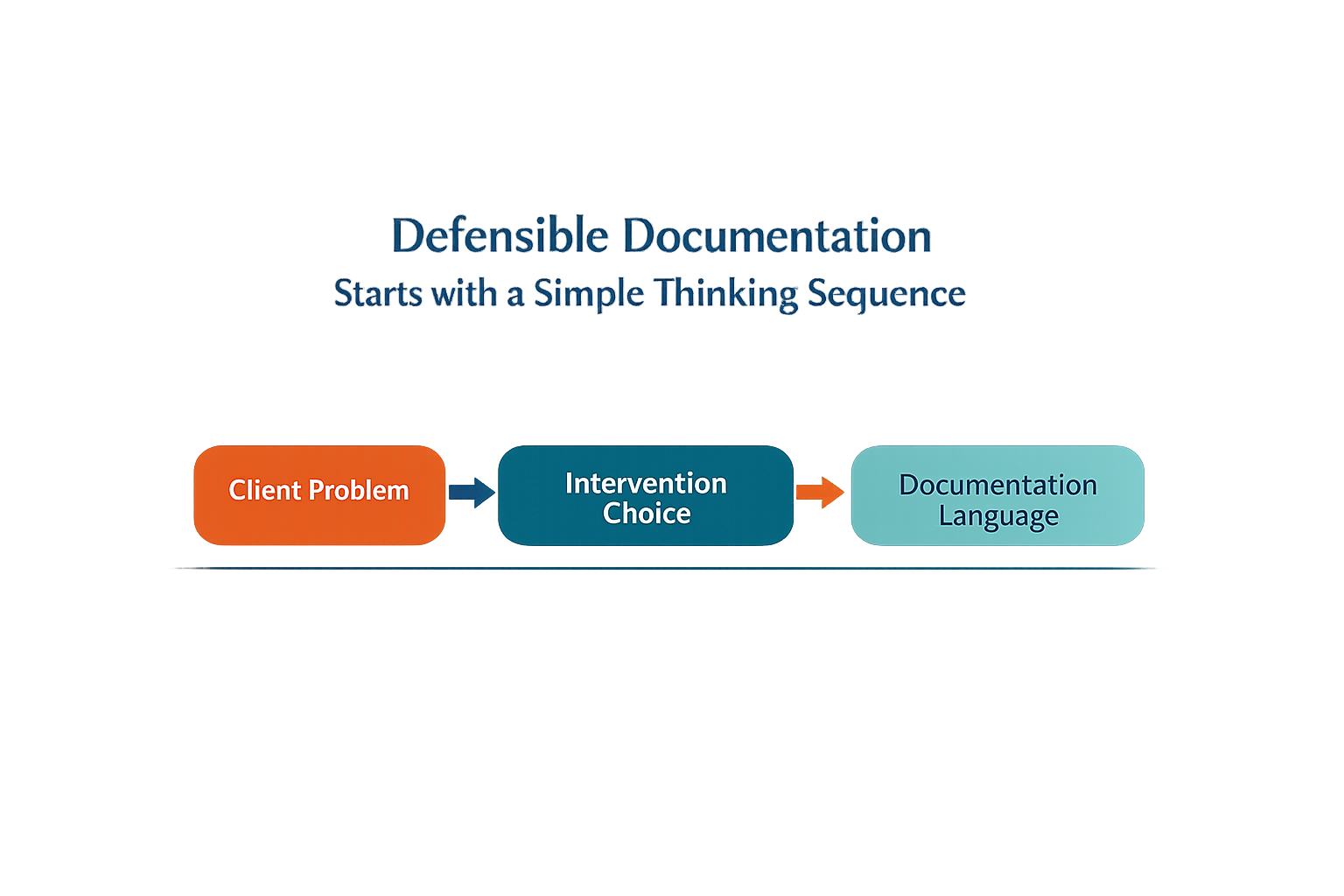
When these three pieces align, your note tells a coherent clinical story: what the client needs, why you chose the intervention, and how it supports functional outcomes. When they don’t align, documentation becomes task-based (“what happened”) instead of skilled (“why it mattered”).
This post shows how to build that alignment, across common adult practice settings, using examples of both weak and defensible documentation.
Why defensible documentation matters (for the clinician and the patient)
Strong documentation isn’t about writing longer notes. It’s about writing notes that make your clinical reasoning visible.
For the clinician, defensible notes:
Protect your license and your practice. If a note is reviewed, it should clearly support that skilled OT services were necessary.
Reduce second-guessing. When you document your reasoning, you stop wondering whether your note “sounds skilled enough.”
Improve communication across the team. Others can understand what you’re targeting and why, improving carryover.
Support reimbursement and reduce denials. Defensible notes show medical necessity and skilled need; this is key to continued authorization.
Save time long-term. A consistent reasoning structure makes documentation faster and more repeatable.
For the patient, defensible notes:
Support appropriate continuation of services. Clear justification helps patients receive the therapy they truly need.
Improve plan-of-care consistency. Strong notes guide future sessions and communicate progress more effectively.
Strengthen goal alignment. Linking impairment to function helps keep therapy meaningful and patient-centered.
Increase safety. When precautions, monitoring, and skilled grading are documented, risks are addressed explicitly.
Defensible documentation is part of how we advocate for skilled OT care.
Here are some examples to help you get a good understanding.
