

How to Translate Movement Observation Into Skilled OT Documentation
Turning What You See During ADLs Into Clear, Clinical Documentation
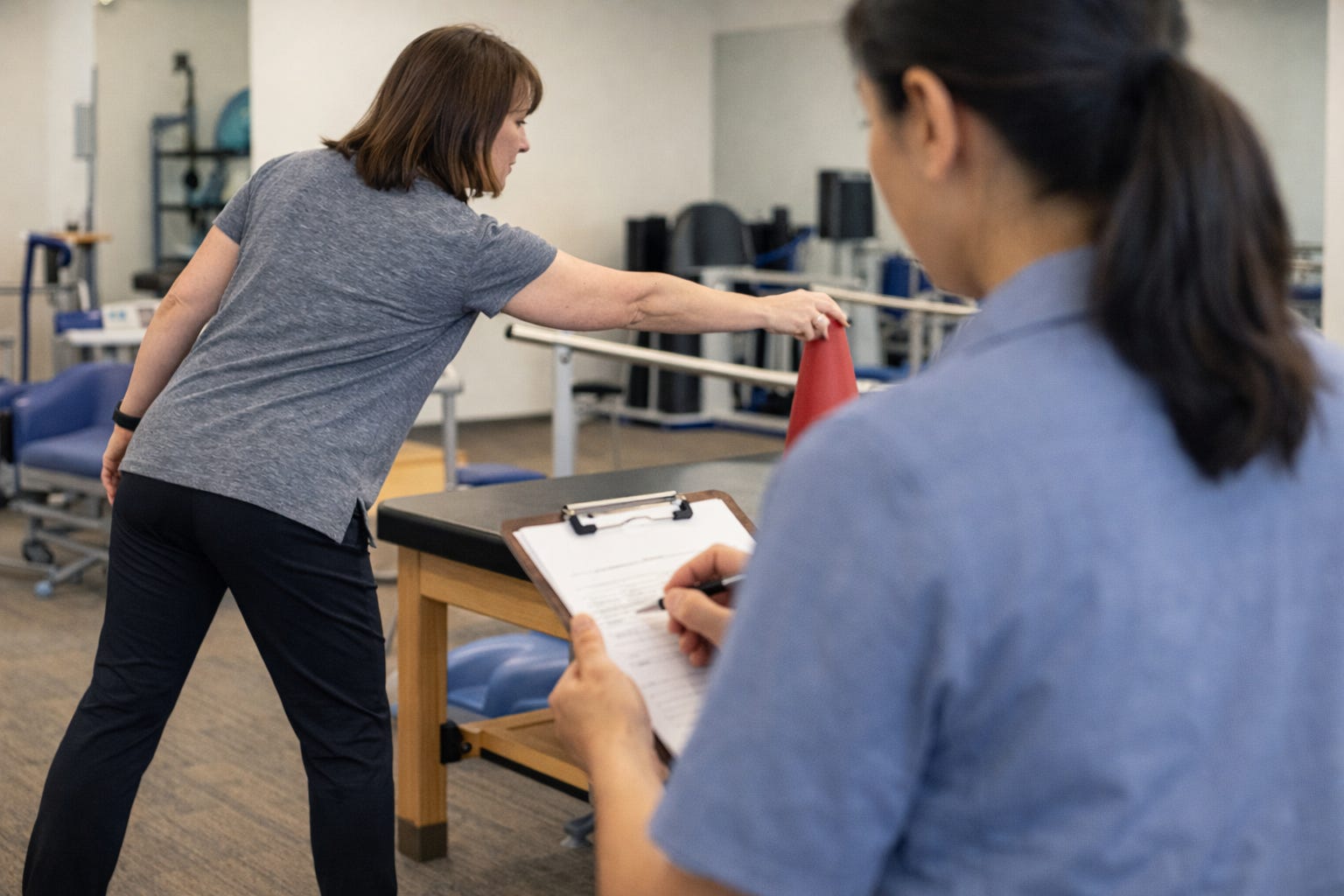
Most occupational therapists observe far more than they document. During everyday tasks, you notice when a patient leans excessively to one side during dressing, when a reach pulls the entire body instead of isolating through the arm, or when a sit-to-stand becomes effortful, uncoordinated, or poorly timed. These details stand out quickly because they change how the task unfolds in real time. The gap is usually not in what is seen, but in how those observations are translated into documentation.
Most of that clinical insight often gets compressed into broad phrases like “balance deficits,” “weakness,” or “requires assistance.” Those terms signal that something is off, but they don’t show how the movement is breaking down or why skilled intervention is needed. This is where your note either stays generic or starts to reflect skilled, clinical reasoning.
When movement observation is translated clearly into documentation, your clinical reasoning becomes easier to see. It connects what the body is doing to how the task is performed and clarifies why your intervention is both necessary and targeted. This post walks through how to take what you are already seeing during functional tasks and turn it into precise, defensible, clinically meaningful documentation.
Why Movement-Based Documentation Matters
Activities of daily living don’t rely on strength or balance alone. They depend on how posture, movement, timing, and control all work together during the task. When documentation focuses only on the outcome, the movement breakdown underneath it often gets lost.
For example:
“Patient completed grooming with min assist”
“Patient demonstrates decreased balance”
“Patient requires cues for safety”
All of these statements are technically accurate. But, none of them explain the movement breakdown driving the assistance. Without that connection, documentation loses depth. It becomes harder to show progression, harder to justify intervention, and harder to communicate the actual focus of therapy.
Movement-based documentation changes that. It shifts the focus away from general labels and toward what is actually happening during the task. Instead of summarizing performance, it breaks it down in a way that reflects how the body is working in real time.
It shifts the focus toward:
