

How to Document Postural Interventions That Support ADL Performance
Making Trunk and Postural Control Work Visible in Your Documentation
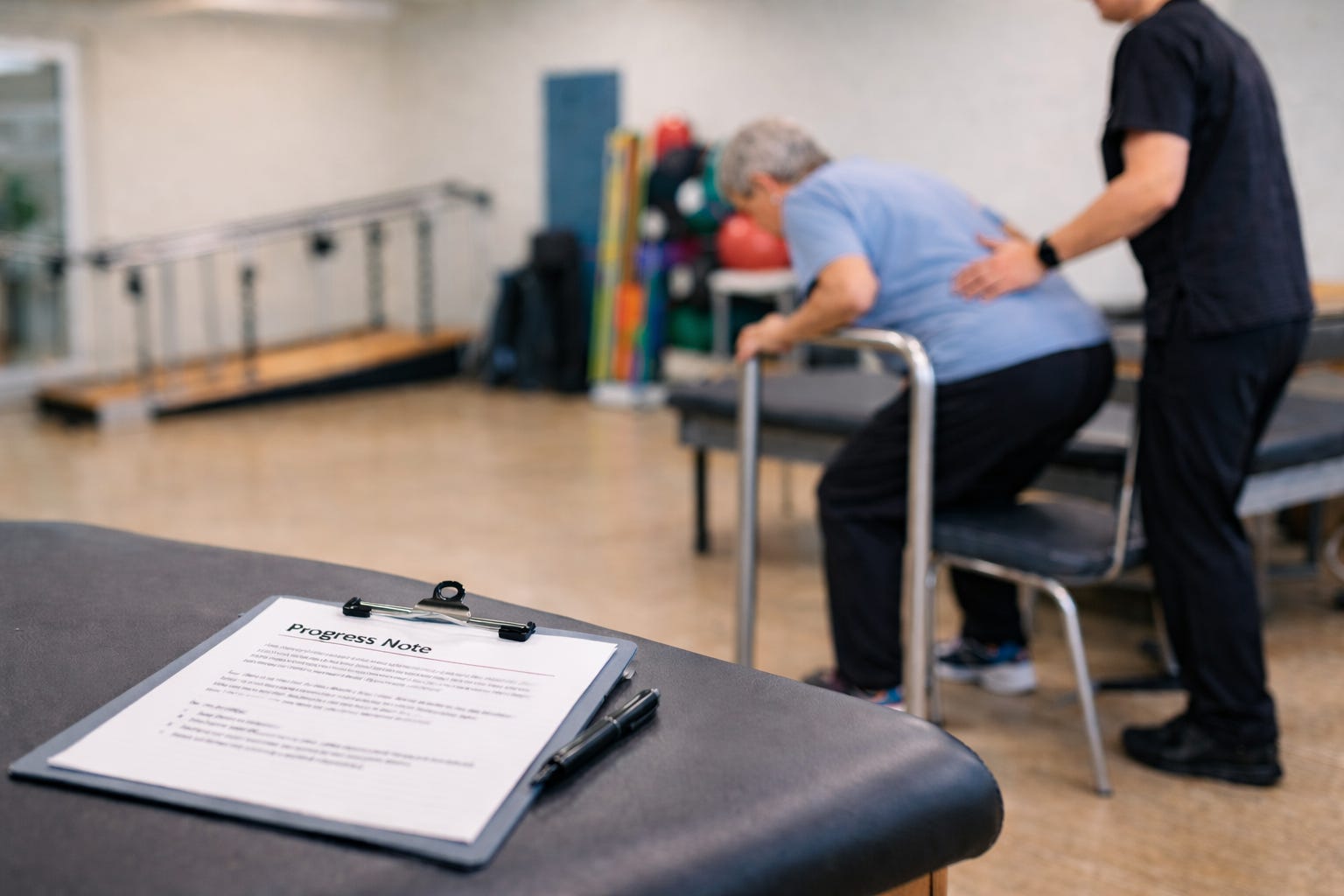
You’re already doing the work. You’re facilitating anterior weight shifts before toilet transfers because you know that lift-off doesn’t happen without coordinated trunk control. You’re targeting trunk rotation during clothing management because dressing is rarely just about reach. You’re grading seated balance during bathing because safety in self-care depends on more than strength alone.
The clinical reasoning is there. The real question is whether your documentation reflects that level of thought.
When you look back at your note, can someone clearly see:
Why a postural intervention was necessary for this patient
What made the intervention skilled
How trunk control directly supported ADL participation
What changed in performance as a result
Postural work is often layered into ADL sessions so naturally that it disappears in the wording. A session can be rich with movement analysis, grading, cueing, and real-time problem solving, yet the note may read like a generic ADL practice entry. That gap is rarely about clinical skill. It is about how we translate movement-based reasoning into language. What follows is built to close that gap.
Inside, you’ll find:
A structured documentation framework to organize postural reasoning within ADL intervention
Language banks specifically tied to trunk control, weight shifting, balance, and self-care performance
Full SOAP note examples written in a clear clinical tone
Diagnosis-specific examples that show how reasoning shifts across presentations
Cross-setting examples to reflect acute, SNF, inpatient rehab, home health, and outpatient contexts
Progression language that captures change across visits
Discharge documentation examples that summarize postural gains in functional terms
Every example is grounded in occupational performance, performance skills, and client factors as they relate to adult ADL participation.
The goal is simple: make your movement analysis visible on the page so your documentation reflects the same level of reasoning you bring to the treatment session.
The Documentation Formula
When postural work is documented well, there is a clear line connecting what you saw to what you did and why it mattered.
It helps to think in a simple clinical reasoning chain:
