

Documenting Sit-to-Stand Initiation and Transfer Quality
Why Sit-to-Stand Documentation Often Falls Short
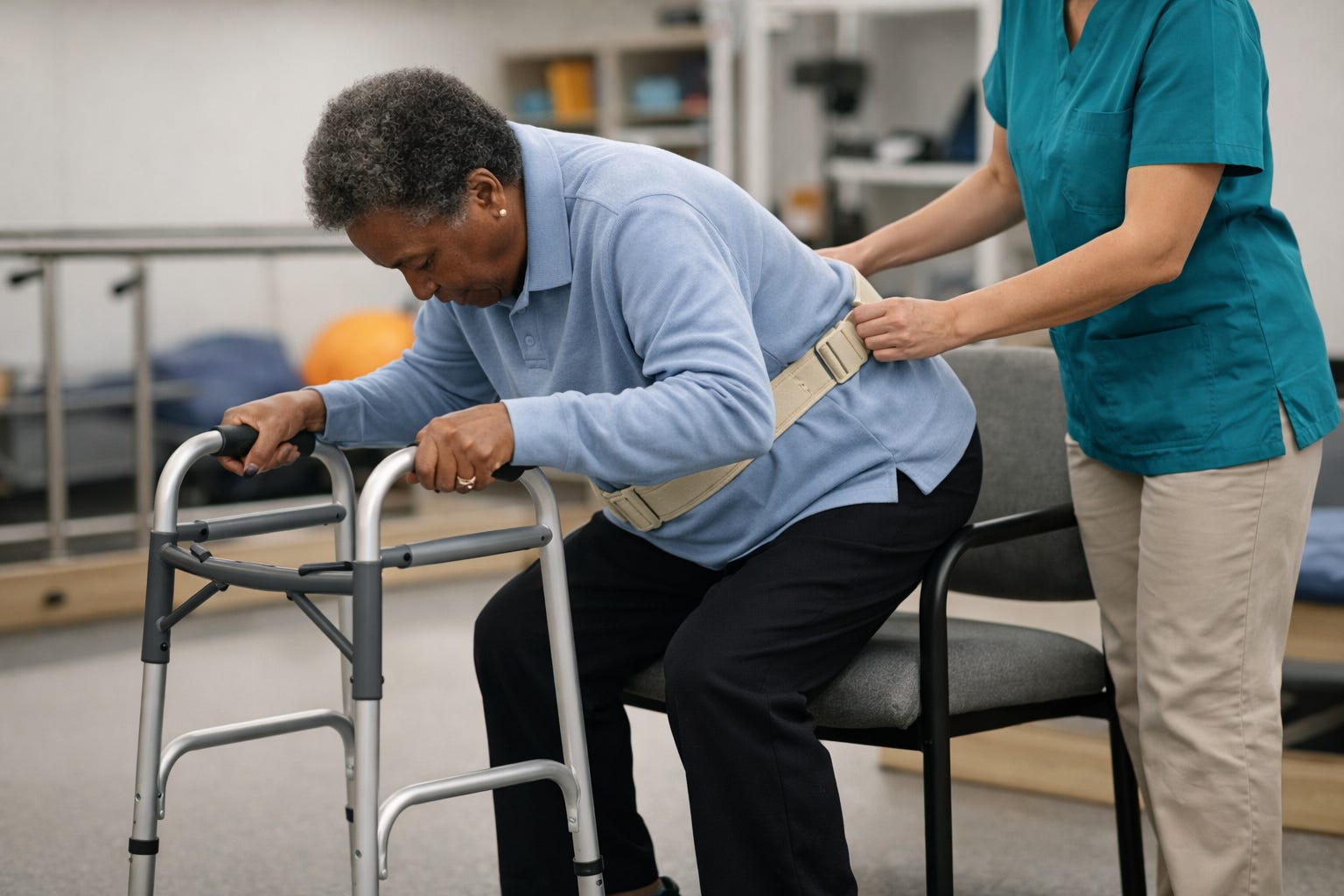
Sit-to-stand is one of the most frequently performed and most frequently documented movements in adult rehabilitation. It shows up across nearly every setting and diagnosis. It is also one of the easiest places for documentation to become overly simplified.
“Min assist with sit-to-stand.”
“Requires supervision for transfers.”
“Improved transfer status with verbal cues.”
These statements communicate something, but they do not show how the movement is happening. They do not capture why the patient needs assistance, what specifically is breaking down, or how your intervention is changing performance over time.
The issue is not a lack of observation. You are already seeing the movement. You notice the repeated rocking. You see the hesitation before lift-off. You feel the excessive reliance through the arms. You recognize when the patient collapses back into the chair instead of controlling the descent. The gap is in how those observations are translated into documentation.
This is where sit-to-stand shows you more about the patient than just their ability to transfer. It gives you a clear picture of how they organize movement, how their coordination is working, and how much control they have during the task.
Reframing Sit-to-Stand as a Movement Sequence
Sit-to-stand is not a single action. It is a coordinated sequence of events that must occur with timing and control. When you break it down, you start to see where the movement becomes disorganized:
Forward weight shift initiation
Trunk flexion and alignment
Timing of lift-off
Lower extremity force generation
Transition into upright posture
Stability once standing
Each part of the movement can work well or break down on its own. Focusing only on the outcome misses where the problem is happening and how your intervention is helping. Documenting the sequence makes your clinical reasoning much easier to see.
What Sit-to-Stand Initiation Tells You
The initiation phase is often where the most meaningful breakdowns occur. This is the moment before the patient stands. The moment where the body organizes to move.
You might see:
Repeated rocking without successful lift-off
Delayed initiation despite verbal cues
Excessive trunk flexion without transition into standing
Hesitation or freezing before movement begins
This is more than just “difficulty with transfers.” What you’re seeing is a breakdown in timing, coordination, and how the movement is organized. When a patient rocks multiple times before standing, they’re generating force but not using it effectively to move. When there’s hesitation, it often points to a problem with sequencing or confidence in how the movement should happen. Clear documentation of initiation shows exactly where the movement starts to break down.
Observing and Documenting Repeated Rocking
Repeated rocking is one of the most common patterns seen during sit-to-stand. It often gets interpreted as “weakness.” What it actually shows is a breakdown in coordination between forward weight shift and lower extremity activation. The patient is generating momentum, but not using it effectively.
What to look for:
Number of rocking attempts before lift-off
Whether rocking amplitude increases over time
Loss of alignment during rocking
Whether lift-off occurs with or without control
How this translates into documentation:
Instead of:
“Patient required multiple attempts to stand.”
You can document:
“Patient demonstrated repeated anterior trunk rocking (3–4 attempts) prior to successful lift-off, with inconsistent timing between forward weight shift and lower extremity activation, resulting in delayed transition to standing.”
This shows:
What the patient is doing
Where the breakdown occurs
Why the movement is inefficient
Documenting Delayed Movement Initiation
