

Documenting Cognitive Interventions That Support ADL Performance
Clear Documentation Examples Showing How Cognitive Work Translates Into Functional Independence
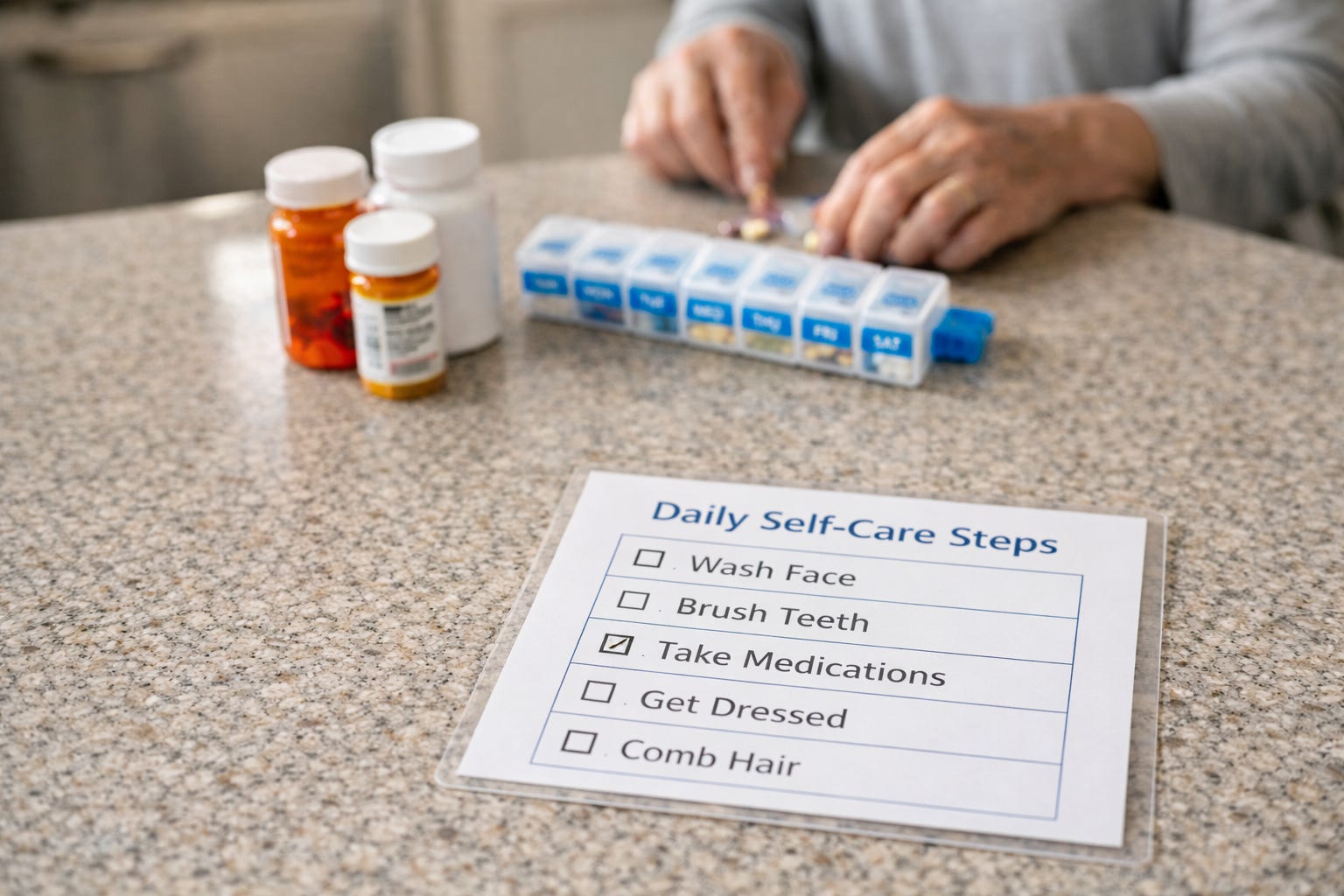
A lot of cognitive intervention is already happening in your sessions, even if it doesn’t always make it into the note. You’re adjusting cueing, organizing the environment, supporting sequencing, and giving the patient time to process instead of stepping in right away. You’re also helping them notice errors and carry a routine through to completion. But when the note simply says, “Completed grooming with cues,” all of that clinical reasoning disappears from the page.
This post is about making cognitive work clear, measurable, and functionally anchored in your documentation. We will walk through:
How to frame cognitive intervention in evaluation documentation
How to write daily notes that clearly link executive demands to ADL performance
How to show measurable progress in cognitive follow-through
How to write progress and discharge summaries that demonstrate functional change
Diagnosis-specific documentation examples
A structured language bank you can adapt across settings
Your clinical reasoning is already guiding the session. Documentation simply needs to reflect it.
Start With the Functional Anchor
Cognitive documentation tends to become vague when it drifts away from function.
Phrases like:
“Worked on sequencing.”
“Addressed executive function.”
“Provided cues for organization.”
don’t tell the reader much about what was happening in the session. They name the cognitive skill, but they don’t explain why it mattered.
Cognitive intervention only becomes clear when it is connected to the activity it supports. That connection is the functional anchor. Instead of documenting the cognitive skill by itself, start with the demand of the routine.
Ask yourself: What part of the task required this cognitive support?
For example:
Sequencing for safe lower body dressing
Working memory for medication management
Initiation for morning hygiene
Problem-solving during shower routine
Task persistence during toileting
